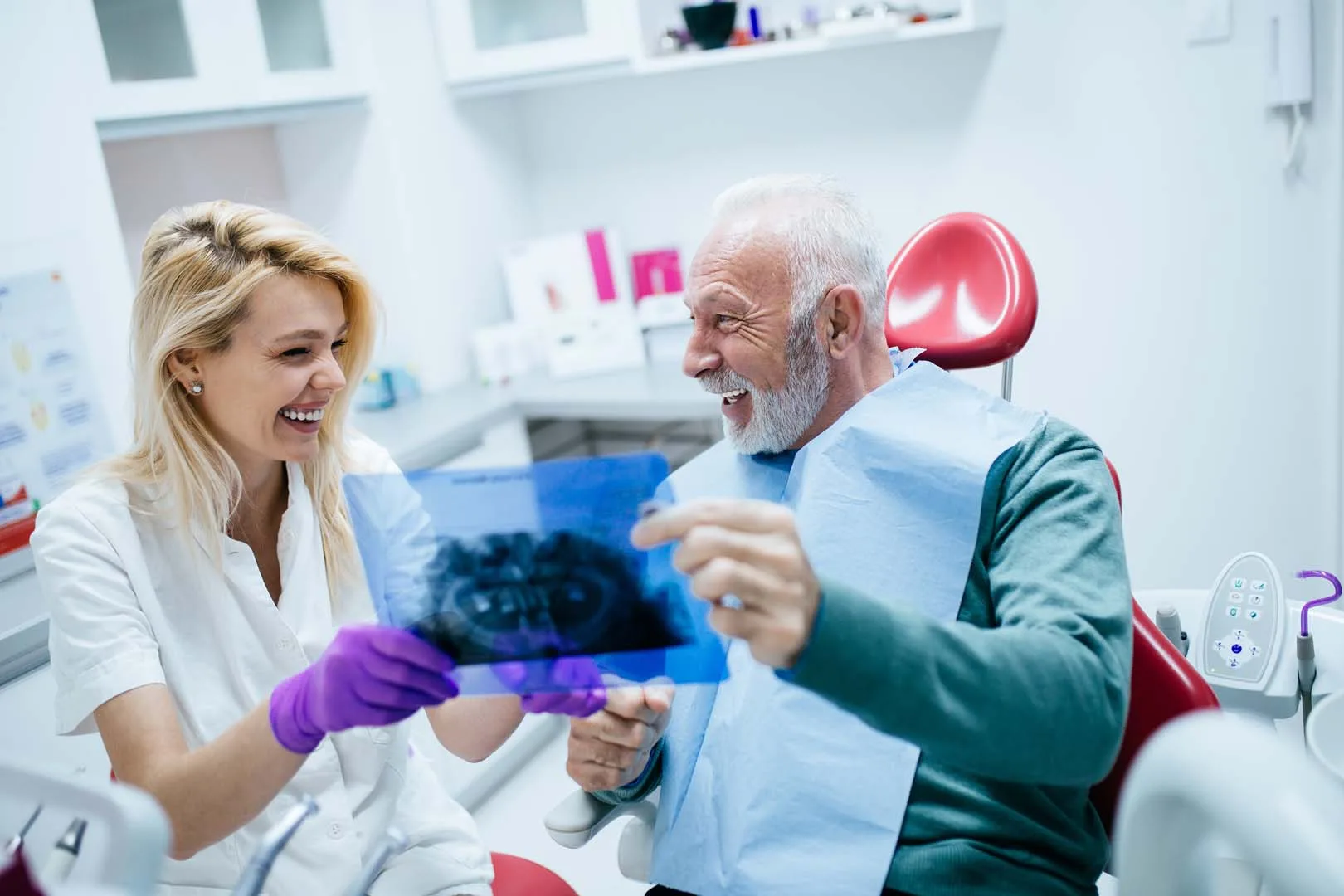
Dentist reviewing a dental X-ray with a smiling senior patient

Varsity Dental · Norman, Oklahoma

Bone Grafting for Dental Implants in Norman, OK

For many patients exploring dental implants, a bone graft is simply the first step in the process. If a tooth has been missing for a while, or was removed after an infection or injury, the jaw bone in that spot often shrinks over time. Without enough solid bone to anchor an implant, the procedure is unlikely to hold long-term. Bone grafting rebuilds that foundation so your implant has the best possible chance of lasting.

At Varsity Dental, we handle this procedure right here in our Norman office. No referrals to unfamiliar offices, no juggling multiple providers. We also accept Delta Dental, Aetna, and a range of other insurance plans, and flexible financing through Cherry, CareCredit, and Alphaeon is available for patients who need it. Ready to find out if a graft is part of your path to implants?

Why Bone Grafting Makes Implants Possible

Dental implants work by fusing directly with the jaw bone, a process called osseointegration. For that fusion to happen, there needs to be enough bone present, both in height and width, to hold the implant post securely. When bone is too thin or too shallow, an implant placed without preparation is far more likely to fail.

Bone grafting adds material to the deficient area, giving your body the structure it needs to grow new, stable bone around it. Once that new bone has matured, your dental implants have a solid base to integrate with.

What Happens When Bone Loss Goes Untreated

Bone loss in the jaw does not stay the same over time. It tends to progress. The longer a tooth is missing, the more volume the surrounding bone loses, which can make future treatment more complex and may eventually put certain implant options out of reach.

Acting sooner rather than later typically means a simpler graft, a shorter treatment timeline, and more options for restoring your smile, whether that is a single tooth implant, implant-supported dentures, or All-on-4 implant dentures.

Benefits of Addressing Bone Loss Before Implant Placement

Choosing to restore your jaw bone before moving forward with implants is an investment in the outcome itself. Here is what that decision supports:

  • A stable anchor for your implant that is designed to hold for the long term

  • Better odds of successful osseointegration between the implant and your jaw

  • Preserved facial structure, since jaw bone loss can affect the shape of your face over time

  • A wider range of implant options, rather than having choices narrowed by advanced bone loss

  • Healthier surrounding teeth and gum tissue, which depend on bone support too

What to Expect During Bone Grafting at Varsity Dental

The process starts with a consultation that includes a 3D cone beam scan, which gives us a detailed, three-dimensional view of your jaw. This imaging lets us see exactly how much bone is present and where, so we can plan your graft precisely rather than guessing.

During the grafting appointment, the area is numbed with local anesthesia. Graft material is placed in the site where bone volume is needed, and the area is closed to allow healing to begin. Most patients find the procedure more straightforward than they expected.

After the graft, your body gradually replaces and reinforces the material with your own new bone. That healing phase is what takes time. We will check in with you throughout and let you know when imaging confirms you are ready for the next step. Having all of this handled in one office, with the same team who knows your case, makes the overall experience much smoother.

Frequently Asked Questions About Bone Grafting

Do I definitely need a bone graft before getting implants?

Not everyone does. Whether a graft is needed depends on how much bone you have left in the area where the implant will go. A 3D cone beam scan at our office gives us a clear picture of your jaw, so we can tell you exactly what your situation looks like before any treatment begins.

How long does healing take before implant placement can begin?

Healing time varies depending on the size of the graft and how quickly your body rebuilds bone. Many patients are ready for implant placement within a few months, though some cases take longer. We will give you a realistic timeline at your consultation based on your specific scan results.

Is bone grafting covered by dental insurance?

Coverage depends on your specific plan. Varsity Dental accepts Delta Dental, Aetna, and several other major carriers, and our team can help you understand what your benefits may cover. For any remaining balance, financing through Cherry, CareCredit, and Alphaeon is available. Visit our Insurance & Financing page for a full list of accepted plans.

Does bone grafting hurt?

The procedure itself is done with local anesthesia, so most patients feel little to nothing during treatment. Some soreness in the days after is normal and usually manageable with over-the-counter pain relief. If you have concerns about comfort, ask us about our sedation options.

Varsity Dental

Contact

General & Cosmetic Dentist in Norman

Get a Clear Answer on Whether a Bone Graft Is Right for You

The only way to know for certain what your jaw needs is to take a look. A consultation and 3D scan at our Norman office will give you a specific, honest picture of your situation and a clear plan for moving forward toward implants.