01
Signs You May Need Periodontal Treatment
Gum disease does not always hurt, which is part of what makes it tricky. By the time patients notice something is wrong, the condition may have been developing for a while. Some of the most common signs include:
Gums that bleed when you brush or floss
Persistent bad breath that does not go away with brushing
Gums that look red, swollen, or puffy rather than firm and pink
Teeth that feel sensitive near the gumline
Gums that appear to be pulling away from your teeth
Loose or shifting teeth
If any of these sound familiar, it is worth scheduling a visit. Our General & Preventive Dentistry team measures the pockets around each tooth at your exam, which is how gum disease is actually diagnosed. You do not need to wait until something hurts.
02
How Periodontal Therapy at Varsity Dental Works
What to Expect at Your First Appointment
Your first appointment focuses on getting a clear picture of what is going on. We use a small measuring tool called a periodontal probe to check the depth of the pockets around each tooth. We also review your X-rays to assess any bone changes. From there, we build a treatment plan that fits your specific situation, whether that is one or two visits, or a phased approach for more advanced disease.
Scaling and Root Planing: What Happens During Treatment
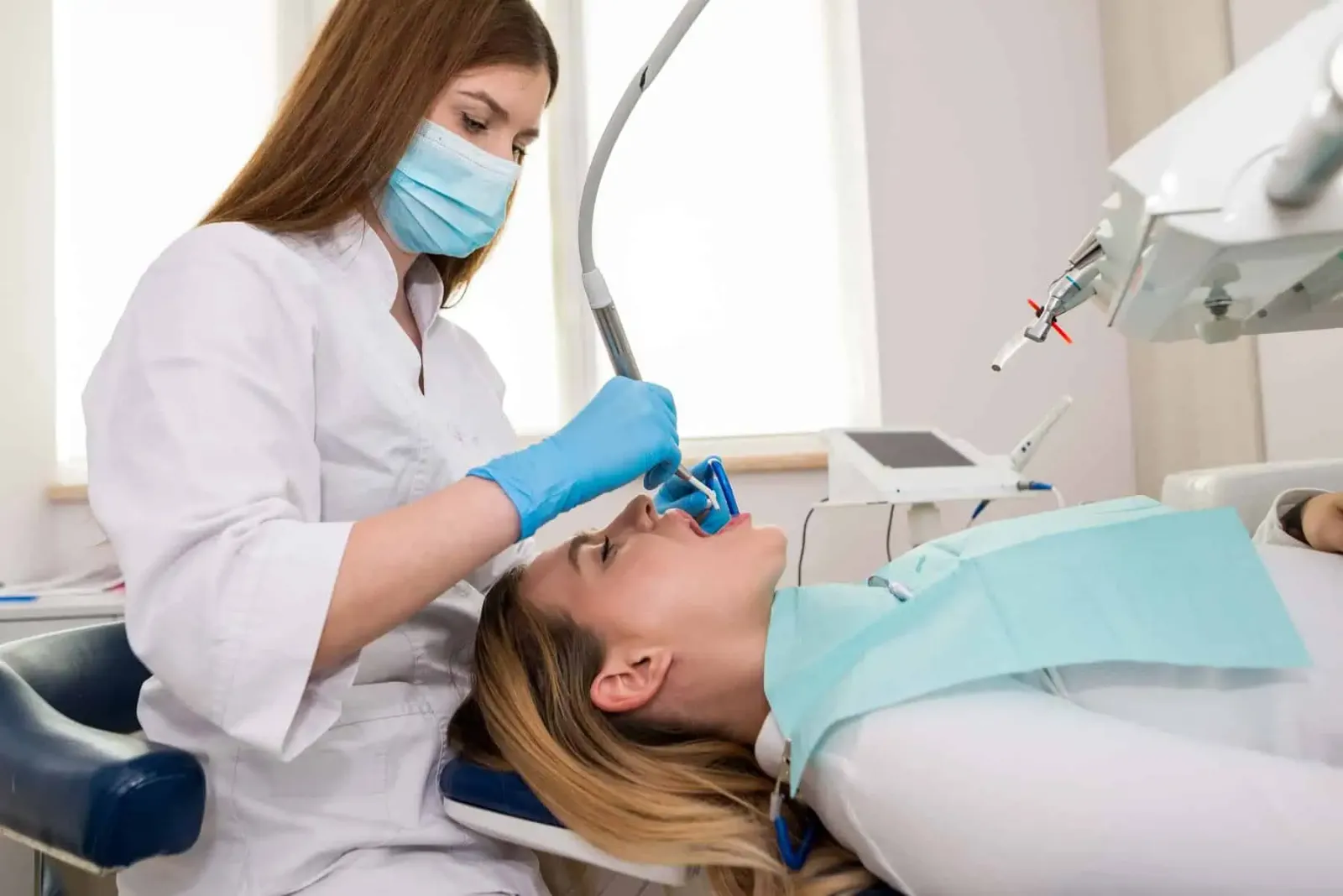
Scaling and root planing is the core treatment for gum disease that has progressed beyond the earliest stage. It goes deeper than a routine cleaning and exam.
Your gums are numbed so you stay comfortable throughout. Then we use hand instruments and ultrasonic tools to carefully clean out the bacterial buildup, tartar, and infected material from below the gumline. The root surface is also smoothed, which helps gum tissue heal and makes it harder for bacteria to reattach. Treatment is typically divided by section of the mouth over a few appointments, depending on what your gums need.
Ongoing Perio Maintenance and What Comes Next
After your initial treatment, gum disease requires ongoing management. Bacteria repopulate quickly, and the pockets that formed around your teeth need more attention than a standard cleaning can provide. Most patients with a history of gum disease benefit from perio maintenance visits scheduled more frequently than twice a year. Your dentist will recommend a schedule based on how your gums respond to treatment and how your home care routine is going. Consistent follow-through on both fronts is what keeps the condition from progressing further.
03
Benefits of Treating Gum Disease Early
Catching and treating gum disease before it advances makes a real difference in what is possible. Earlier-stage treatment tends to be less involved, more comfortable, and easier to maintain long term. Treating gum disease when it is still manageable helps protect the bone that supports your teeth, reduces the risk of tooth loss, and supports your overall health in ways that go beyond your mouth.
04
What Happens If Gum Disease Goes Untreated
The Consequences of Letting It Progress
We understand that making a dental appointment is not always the first thing on a busy person's list. But gum disease does not pause while life gets hectic, and the gap between early and advanced disease matters.
Untreated gum disease can lead to:
Gradual loss of the bone that holds your teeth in place
Gum recession that exposes root surfaces and increases sensitivity
Loose teeth that eventually require extraction
A higher risk of tooth loss overall
There is also a broader health connection worth knowing about. Research has identified links between chronic gum inflammation and conditions such as heart disease and diabetes. Bleeding gum tissue creates a pathway for oral bacteria to enter the bloodstream, which is why dentists and physicians increasingly look at gum health as part of the whole-body picture.
None of this is meant to alarm you. It is simply worth knowing that treating gum disease is one of the more impactful things you can do for your long-term health, and the earlier you address it, the more straightforward that process tends to be.
05
Periodontal Care Without Insurance? We Have a Plan for That
If you do not have dental insurance, staying on top of perio maintenance can feel financially out of reach. Our Perio Maintenance Membership Plan is designed to change that. For $55 per month or $660 per year, the plan includes:
3 perio maintenance cleanings per year
2 doctor exams
2 cavity-detection X-rays
2 emergency exams
Teeth whitening after your second cleaning
15% off all other treatments (some exclusions apply)
Most HSA/FSA cards accepted
It is a straightforward way to keep your gum health on track without worrying about individual visit costs. Visit our membership plans page for full details and enrollment information.
If you do have insurance and want to understand your coverage for periodontal care, our Insurance & Financing page walks through the plans we accept and the financing options available.
06
Frequently Asked Questions About Periodontal Therapy in Norman
Is periodontal therapy painful?
Most patients are surprised by how manageable the process is. Your gums are numbed before scaling and root planing, so discomfort during treatment is minimal. Some tenderness or sensitivity in the days afterward is normal and typically mild. If you have concerns about anxiety or sensitivity, ask us about sedation options at your first appointment.
How is a deep cleaning different from a regular cleaning?
A routine cleaning focuses on removing plaque and tartar from tooth surfaces at and just above the gumline. A deep cleaning goes below the gumline to clear out bacteria and buildup from the pockets that form around teeth when gum disease is present. It also smooths the root surface to help gum tissue reattach and heal.
How many appointments will I need?
It depends on the severity of the gum disease. Milder cases may be managed in one or two visits. When deeper pockets or bone loss are involved, treatment is usually spread across a few appointments, often cleaning one section of the mouth at a time. Your dentist will outline a plan specific to your situation at your first visit.
Does insurance cover periodontal therapy?
Many dental insurance plans include some coverage for periodontal treatment, though the amount varies by plan. Varsity Dental accepts a range of insurance plans, including Delta Dental and Aetna. If you are uninsured or underinsured, our Perio Maintenance Membership Plan may help cover your ongoing care costs.